A/B testing
Show shoppers different designs of the same deal and keep the one that sells more — no guesswork.
An A/B test splits your shoppers between two or more designs of the same deal and measures which one sells better. Every variant sells the same offer at the same price — BigCommerce charges one price — so tests compare presentation: layout, colors, wording, badges, timers.
Start a test
- Open a live deal and go to step 5, Settings.
- In the A/B test section, click Start an A/B test. Shoppers are now split evenly between A (your deal's current design) and B.
- Click the B tab. It has its own Design and Texts sections — change what you want to test, e.g. switch the layout to Cards.
- Click Save variant B. Shoppers see it right away.
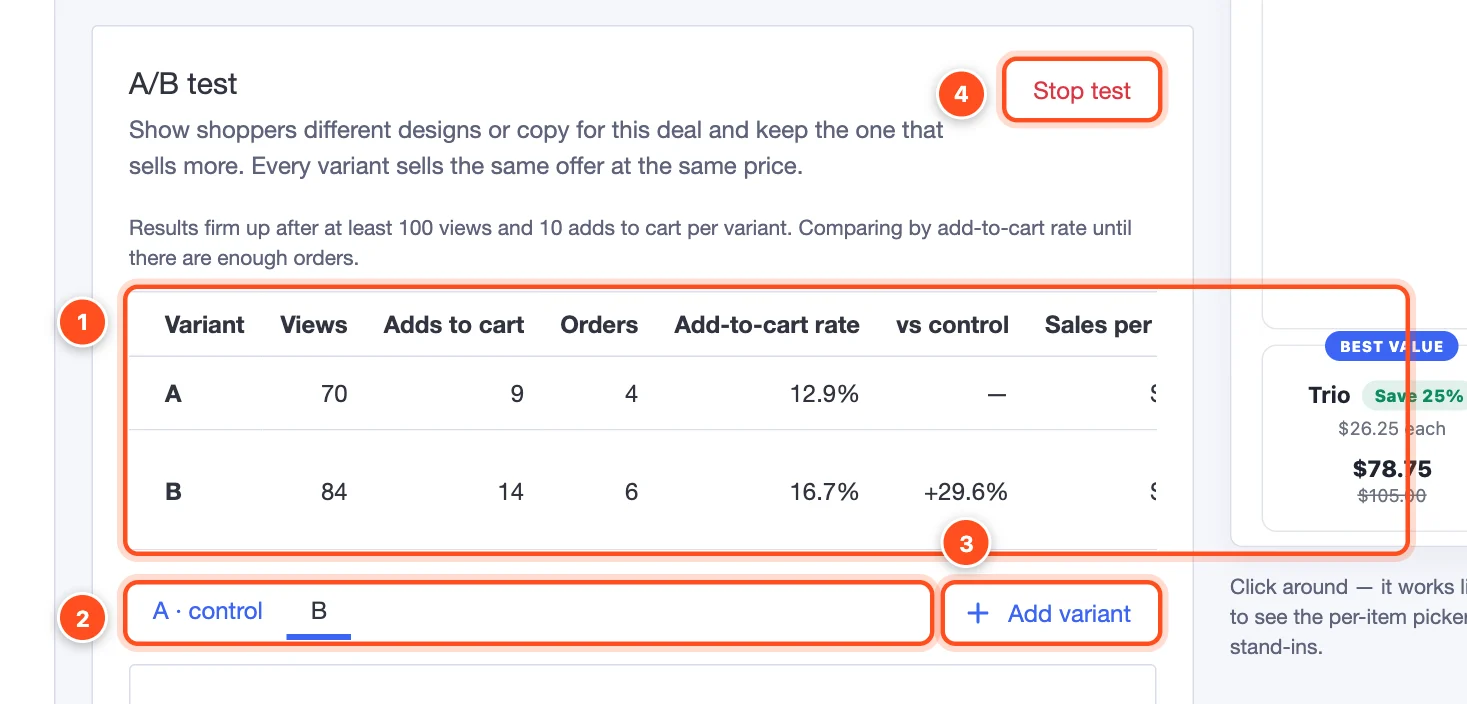
- Results so far for each variant.
- Variant tabs — A is the control (always your deal's own design; change it in the Design step). B, C, D are your alternatives.
- Add variant — test up to four designs at once.
- Stop test — end the test; every shopper goes back to the deal's own design.
Tip: Test one thing at a time — layout or heading or badge — so you know what made the difference. Good first tests: Classic vs Cards layout, a different heading, badges on vs off, or a countdown timer.
Read the results
Results show in the editor and on the Analytics page:
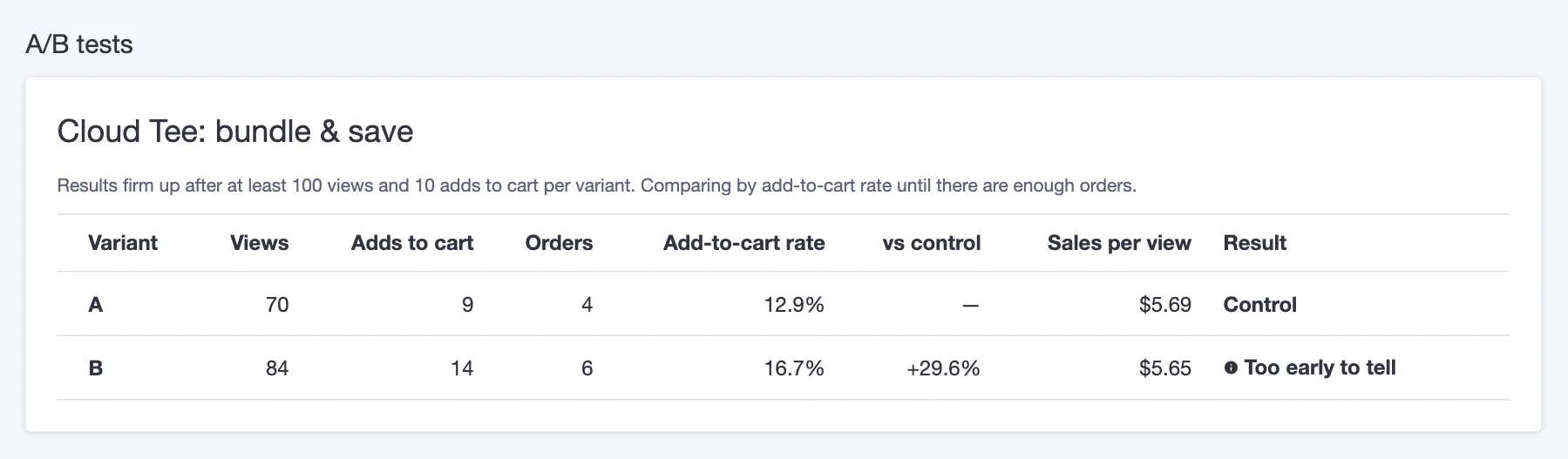
- Views, Adds to cart, Orders — for each variant.
- Add-to-cart rate or Order rate — the app compares variants on add-to-cart rate until there are enough orders to compare on orders.
- vs control — how much better (or worse) each variant does than A.
- Sales per view — revenue for each view, a good tiebreaker.
- Result:
- Too early to tell — not enough data yet. Results firm up after at least 100 views and 10 adds to cart per variant.
- Winning / Losing — the difference is real with 95%+ confidence.
Apply the winner
When a variant is the clear winner, the results say so and offer Apply. Applying makes that design the deal's own design for every shopper, and ends the test. Its results stay in Analytics.
Note: Give a test at least a week (and ideally until the results stop saying "Too early to tell"). Shopping behaviour changes between weekdays and weekends, so very short tests can mislead.